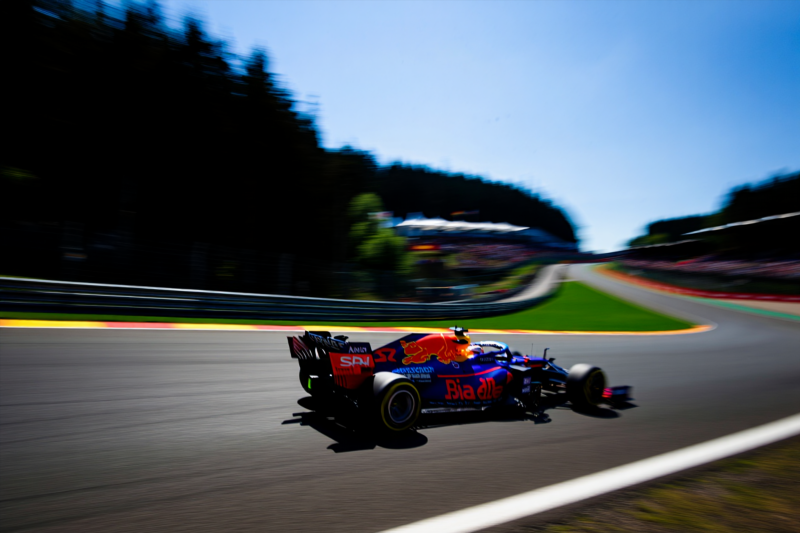
Understanding the strategic choice between high downforce and low downforce setups is crucial for maximizing performance in Formula 1, especially at iconic circuits like Spa-Francorchamps and Monza. Each track’s unique characteristics demand tailored vehicle configurations, significantly influencing lap times, tire management, and overall race strategy. In this article, we explore how the downforce differential impacts performance, weigh the benefits and drawbacks, and provide expert insights to help teams and enthusiasts optimize their approach at these legendary tracks.
The Fundamentals of Downforce in Formula 1
What is Downforce?
Downforce refers to the aerodynamic force that presses a car onto the track surface, increasing grip and handling stability at high speeds. It is generated primarily through wing designs, diffuser efficiency, and overall aerodynamic configuration.
High Downforce Setups
- Characteristics: Maximize grip for tight corners, high cornering speeds.
- Advantages: Better lateral grip, improved stability in corners, especially at tracks with many turns.
- Disadvantages: Increased aerodynamic drag reducing top speed on straights, higher tire wear.
Low Downforce Setups
- Characteristics: Minimize drag for higher straight-line speeds.
- Advantages: Enhanced straight-line velocity, better top speeds, and potentially faster lap times on circuits with long straights.
- Disadvantages: Reduced grip during cornering, demanding more precise car control.
The Unique Demands of Spa and Monza
Spa-Francorchamps: A Track of Extremes
- Key Features: Long straightaways (e.g., Kemmel Straight), multiple high-speed corners, elevation changes.
- Implication for Downforce: Balances between high and low downforce are critical. High downforce grants cornering stability, but at the expense of speed on straights. Low downforce boosts straight-line speed but risks instability.
Monza: The Temple of Speed
- Key Features: One of the fastest circuits with iconic high-speed straights—Curva Grande, Lesmo curves, Parabolica.
- Implication for Downforce: Low downforce setups are often preferred to maximize straight-line speed. However, the high-speed corners require sufficient grip to prevent sliding and maintain confidence.
Impact of Downforce Choice on Performance
Lap Time Differentials
| Aspect | High Downforce | Low Downforce |
| Cornering Speed | Significantly increased, enhances lap times in corners | Reduced, potentially slower lap times in tight sections |
| Top Speed | Lower due to increased drag | Higher, advantageous on long straights |
| Tire Wear | Higher, due to increased aerodynamic load | Lower, allowing longer stints |
| Stability & Control | Superior during high-speed turns | Less stable, requires precise driving |
Race Strategy Considerations
- Spa: Opt for a medium to high downforce setup in most sectors, but tweak for specific conditions (wet or dry). Track evolution and weather influence setup decisions.
- Monza: Typically, teams favor low downforce to maximize speed, but must balance against tire degradation and slip angles at high speeds.
Optimizing Your Approach: When to Use High or Low Downforce
Deciding Factors at Spa and Monza
| Factor | When to Favor High Downforce | When to Opt for Low Downforce |
| Track Conditions | Wet or variable conditions, tight corners | Dry, stable weather, long straights |
| Qualifying Tactics | Achieving maximum grip for best lap times | Flagship speed potential for pole positions |
| Race Pace & Tire Management | Ensuring stability for consistent laps | Reducing tire wear, pushing for extra mph |
Practical Tips for Teams and Drivers
- Adaptive setups: Adjust aero configurations for different race segments or in response to evolving conditions.
- Data-driven analysis: Use telemetry and real-time data to optimize downforce during the race.
- Strategic compromises: Balance between grip and speed depending on track phase, weather, and race position.
Frequently Asked Questions
How does downforce impact tire degradation?
Higher downforce increases aerodynamic load, which improves grip but accelerates tire wear due to higher friction and heat in tires. Conversely, low downforce reduces stress on tires, extending their lifespan but at the cost of grip.
Can a driver switch between high and low downforce during a race?
In modern F1, aerodynamic adjustments are often limited to pre-race setup. However, some teams have the capability to make adjustments during pitstops, especially with adjustable wings, allowing drivers to adapt to conditions and strategic needs.
Is one setup universally better for Spa or Monza?
No; both tracks demand different setups based on weather, tire strategies, and vehicle characteristics. Teams often prepare multiple configurations and choose dynamically based on real-time factors.
In the high-stakes environment of Formula 1, every fraction of a second counts. Understanding the impact of high versus low downforce setups, especially at demanding circuits like Spa and Monza, is essential for optimizing lap times and race outcomes. By carefully analyzing track characteristics, weather conditions, and vehicle dynamics, teams can craft tailored strategies—leaning into high downforce for grip and stability when corners dominate, or low downforce to unleash straight-line speed on the long straights.
Unlock the science of speed and steer your F1 performance to victory—whether through maximizing grip or pure velocity.
Take Action: Elevate Your F1 Strategy Today
Are you ready to refine your race tactics? Subscribe to ApexHappiness F1 for in-depth race analysis, driver insights, and engineering breakthroughs that give you the competitive edge. Embark on your journey toward mastering the art of downforce and dominate the circuits with superior knowledge.
*Join now and accelerate your racing insights!*