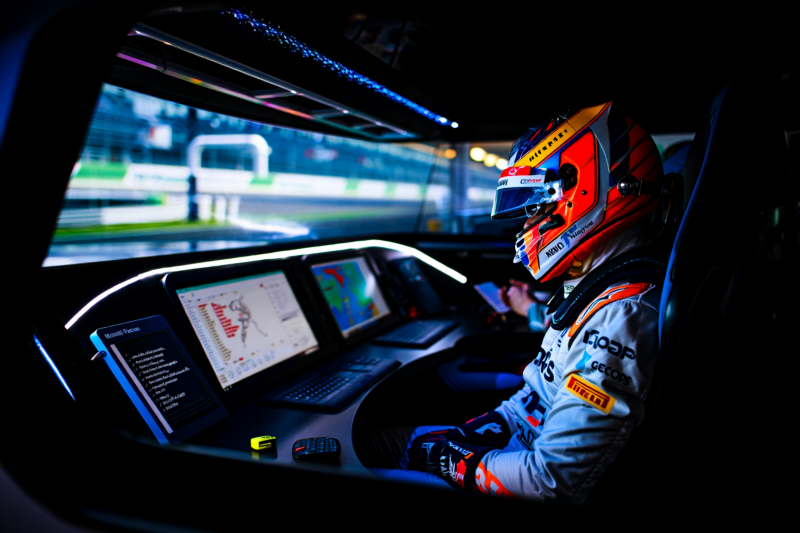
Unlocking the Power of Mental Resilience in Formula 1
In the high-octane world of Formula 1, success is as much about mental strength as it is about car performance and technical mastery. ApexHappiness F1 recognizes that peak racing performance hinges on a driver’s ability to stay focused under pressure, recover from mistakes swiftly, and maintain a high level of concentration throughout a Grand Prix. This article explores proven mental techniques and focus reset routines specifically tailored for F1 drivers and enthusiasts seeking to enhance their mental game.
Why the Mental Game Matters in Formula 1
The High-Speed Psychology of F1
F1 drivers face relentless mental challenges:
- Intense focus during multi-second races
- Situational awareness across complex circuit layouts
- Immediate response to unpredictable events like crashes or sudden regulation changes
- Managing high-speed mistakes and their aftermath
Success requires not only physical skill but also mental agility — the ability to stay in the moment, recover quickly, and prevent mistakes from compounding.
Impact of Mental Resilience on Race Performance
Mental resilience influences:
| Aspect | Impact on F1 Performance |
| Focus | Maintains concentration during critical moments |
| Adaptability | Adjusts strategy on the fly after setbacks |
| Recovery | Bounces back swiftly from errors or setbacks |
| Confidence | Sustains composure under pressure |
Developing a robust mental game ensures that drivers can navigate the chaos of a Grand Prix with clarity, confidence, and resilience.
Proven Focus Reset Routines for F1 Drivers
1. The 10-Second Focus Recharge
Purpose: Re-center attention quickly during high-speed moments or after a mistake.
How to do it:
- Take a *deep breath* — inhale for 4 seconds, hold for 2, exhale for 4.
- Briefly *scan* the immediate environment for visual cues (tire wear, brake points).
- Mentally repeat a simple affirmation, such as “Stay sharp” or “Focus now.”
- Reset your attention to the *next target* — apex, braking point, or turn-in.
When to use: After a mistake, minor miscalculation, or during brief lulls in the race.
2. The Mindfulness Reset Technique
Purpose: Reduce racing tension and restore focus through mindfulness.
How to do it:
- Close your eyes (if safe), or soften your gaze.
- Focus solely on your breath, feeling the air fill and leave your lungs.
- Notice physical sensations — grip of the steering wheel, position on the seat.
- Let racing worries drift away with each exhale.
- Re-engage with the racing line or strategy once your mind feels clear.
When to use: During pit stops, between stints, or during slow laps.
3. The Visualization Power Boost
Purpose: Reinforce confidence and mental preparedness.
How to do it:
- Before the race or during a break, visualize a flawless lap — smooth steering, optimal braking point, clean overtakes.
- See yourself recovering perfectly after a mistake.
- Attach positive emotions to these mental images — confidence, control, excitement.
- Repeat as needed, especially before key race segments.
When to use: During pre-race routines or when anticipating a challenging section.
Strategies for Managing High-Speed Mistakes
Immediate Response to Racing Errors
Perfection is impossible, and mistakes happen — tire lock-ups, overshooting a corner, or misjudging braking distance. The key is how you respond:
- Pause and Breathe: Use a quick breathing exercise to calm the mind and muscles.
- Acknowledge, Don’t Dwell: Accept the mistake as part of racing, then refocus instantly.
- Adjust Strategically: Reassess your line or speed, then proceed without hesitation.
Long-Term Approach: Building Resilience
- Mental Simulation Training: Practice visualizing difficult scenarios and your composure.
- Delayed Gratification: Understand that mistakes provide learning, not failure.
- Positive Self-Talk: Replace self-criticism with encouraging statements like “I’ve handled worse,” or “Next lap, I’ll be better.”
Integrating Focus Routines into Your Racing Mindset
Pre-Race Rituals
Establish consistent routines such as visualization, breathing, or affirmations to prime your mental focus ahead of each session.
In-Race Focus Anchors
Identify key cues — blinking lights, audio cues, or physical gestures (like adjusting your mirror) — as *attention anchors* to shift focus during stressful moments.
Post-Race Reflection
Use mental debriefs to analyze what routines worked, what caused lapses, and how to improve focus for future races.
Your Path to Peak Mental Performance in F1
Mastering the psychological aspects of racing is a continuous journey. By adopting these focus reset routines, mental techniques, and recovery strategies, you can:
- Enhance your concentration during critical moments
- Bounce back swiftly from high-speed mistakes
- Maintain clarity and confidence across the demanding race day
Remember: Every driver, from rookies to seasoned veterans, benefits from sharpening their mental game — because in Formula 1, mental resilience is often the difference between podium and pit lane.
Ready to Elevate Your Racing Focus?
Explore our expert-driven techniques and integrate them into your training regimen today. The science of speed isn’t just on the track — it’s in your mind. Unleash your full potential with the right mental game.
Harness the science of focus, resilience, and mental clarity — and accelerate your journey to F1 mastery.