Unlocking the Secrets of Rapid Race Execution
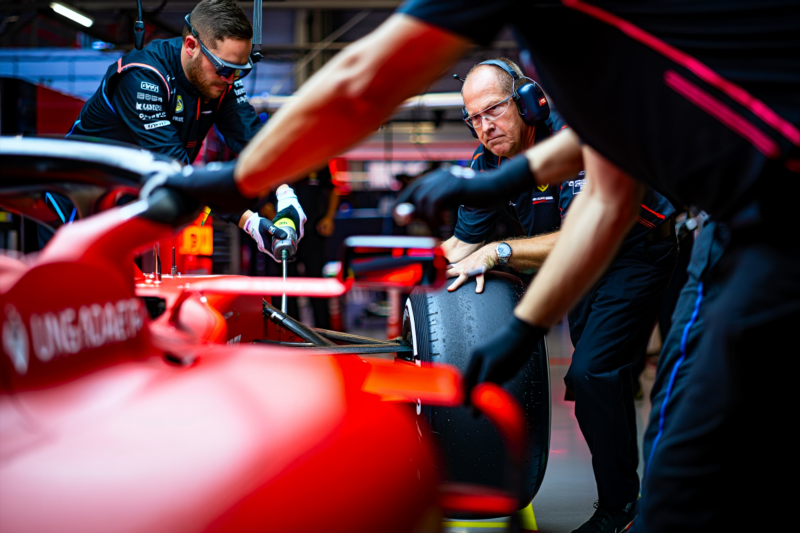
In the high-stakes world of Formula 1, where races are often decided by fractions of a second, the importance of lightning-fast pit stops cannot be overstated. These critical moments require impeccable precision, coordination, and speed—attributes that are continually pushed to their human and technological limits. But what exactly makes a pit stop so fast? How do scientific advances and cutting-edge tools reshape human capabilities, enabling engineers and mechanics to execute flawless, rapid repairs and tire changes under immense pressure?
This article explores the fascinating intersection of human performance, technological innovation, and scientific breakthroughs that drive the efficiency of F1 pit stops. We reveal how teams harness the science of speed to shave precious seconds off race times and what it means for the future of motorsport.
The Science of Human Limits in Pit Stop Performance
Human Factors in Pit Stop Efficiency
Despite technological marvels, the core of any fast pit stop remains the team of highly trained humans. Their speed hinges on:
- Reaction Time: The ability to respond instantly to race cues or team commands.
- Motor Skills & Precision: Fine motor control to manipulate tools and components swiftly without mistakes.
- Coordination & Synchronization: Seamless teamwork to complete complex tasks in unison.
Training and Human Optimization
Teams invest heavily in training programs to optimize human performance:
- Simulations and Drills: Repetition of pit procedures under simulated stress conditions.
- Visual and Cognitive Training: Enhancing focus, situational awareness, and decision-making speed.
- Physical Conditioning: Ensuring mechanics can sustain high-intensity activity for the entire race.
Human Limits and the Bottleneck
Even with perfect training, human reaction times typically top out around 200 milliseconds, and physical fatigue can introduce variability. The challenge lies in minimizing these variabilities to ensure rapid, consistent executions.
Technological Innovations Pushing Human and Machine Limits
Advanced Tools and Equipment
Modern F1 teams wield an array of high-tech tools that dramatically boost efficiency:
- Pre-Positioned Equipment: Parts and tools are strategically placed for immediate access.
- Quick-Release Fasteners: Specialized lugs and connectors designed for rapid detachment and attachment.
- Automated Telemetry & Sensors: Real-time data guides pit crew actions and verifies operational accuracy.
Robotics and Automation in Pit Stops
While traditional operations rely on humans, increasing use of robotics enhances speed and precision:
- Robotic Arms: Automated systems for tire changes and component replacements.
- Laser-guided Systems: Ensuring perfect alignment and torque specifications.
These innovations reduce human error and push the envelope of what’s physically possible during a pit stop.
Data Analytics and Machine Learning
Modern teams leverage big data and artificial intelligence to optimize pit stop strategies:
- Analyzing historical performance to identify bottlenecks.
- Predicting tire wear and mechanical issues preemptively.
- Simulating pit stop scenarios to refine procedures and timing.
This scientific approach ensures that every second counts during critical moments on the track.
The Future: Merging Human Ingenuity with Cutting-Edge Technology
Augmented Reality (AR) and Virtual Reality (VR)
Teams are experimenting with AR and VR tools for training and real-time decision-making, enabling mechanics to visualize complex procedures and anticipate potential complications.
Exoskeletons and Human Augmentation
Emerging research focuses on wearable exoskeletons and biofeedback devices to augment human strength, endurance, and precision—further expanding the human limits in pit stop performance.
Continuous Scientific Research
As our understanding of biomechanics, material science, and machine learning deepens, the synergy between humans and technology will lead to even faster, safer pit stops—potentially reducing existing record times and creating new standards in modern Formula 1.
Frequently Asked Questions
How important is reaction time in a pit stop?
Reaction time, while crucial, is just one factor. Rapid decision-making combined with physical skill and tool efficiency define overall pit stop speed.
Can robotics completely replace human pit crews?
While robotics are increasing in use for specific tasks, the human element remains vital for adaptability, troubleshooting, and complex procedures that require judgment and finesse.
What scientific breakthroughs have most impacted pit stop performance?
Advancements in materials for fasteners, sensor technology for real-time data, and AI-driven strategy planning have been game changers.
How do teams train to improve pit stop times?
Through rigorous simulations, drills under race-like pressure, physical conditioning, and adopting new technologies that enhance coordination and speed.
The relentless quest for faster, more efficient pit stops exemplifies the blend of human talent and scientific innovation. As technological advances continue to break human limits—enhancing reaction times, accuracy, and endurance—teams are equipped to perform at peak efficiency, ultimately translating into competitive advantages on race day.
In Formula 1, mastering PitStop Science isn’t just about fast mechanics; it’s about harnessing the full potential of human performance synergized with the latest technology. The future promises even more astonishing breakthroughs, where speed becomes not just a goal but a meticulously engineered science.
Ready to delve deeper into the science of speed? Stay tuned to ApexHappiness F1 for comprehensive race analysis, driver insights, and strategic perspectives that reveal the science behind every lap.