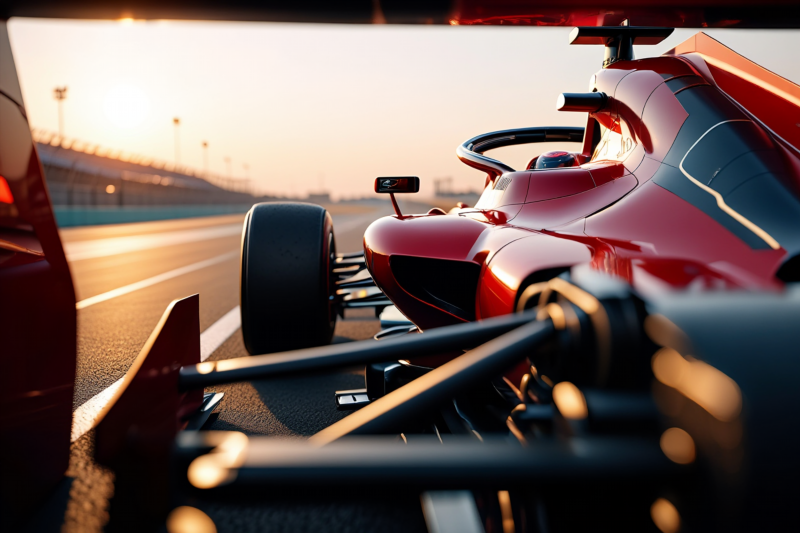
Suspension and Ride Height Fundamentals: Why Mechanical Grip Wins in F1
Introduction: Unlocking the Secrets of F1 Performance
In the high-stakes world of Formula 1, every millisecond counts. From aerodynamics to tire management, each element plays a crucial role in translating speed into race-winning performance. Among these, suspension setup and ride height are often overlooked yet vital factors that directly influence a driver’s ability to generate and maintain mechanical grip—the extra grip achieved through a car’s mechanical setup rather than aerodynamic downforce alone. Understanding these fundamentals not only enhances your knowledge but also sharpens your driving skills, giving you a competitive edge on the track.
What Is Suspension and Ride Height in F1?
Suspension System: The suspension in a Formula 1 car connects the chassis to the wheels, absorbing bumps, maintaining tire contact with the track, and influencing handling characteristics. It ensures the car remains stable through corners, accelerations, and braking zones.
Ride Height: Ride height refers to the vertical distance between the ground and the bottom of the car’s chassis or floor. Adjusting ride height alters the car’s center of gravity, aerodynamic profile, and contact patch of tires.
Key Components and Adjustments:
- Dampers and Springs: Control vertical wheel movement
- Anti-roll Bars: Reduce body roll during cornering
- Ride Height Settings: Fine-tuning the vehicle’s ground clearance
Why Mechanical Grip Matters in F1
Mechanical grip is the grip derived from the car’s mechanical setup—suspension geometry, tire contact patch, and ride height—independent of aerodynamic downforce. It’s especially critical in low-speed corners or when aerodynamic efficiency is compromised.
Benefits of Mechanical Grip
- Enhanced Cornering Speed: Better tire contact means increased grip, allowing faster turns.
- Improved Stability: A well-balanced suspension reduces understeer and oversteer.
- Better Tire Wear Management: Proper suspension settings ensure even tire pressure distribution, extending tire life.
- Adaptability to Track Conditions: Mechanical grip provides a reliable grip foundation in varying weather and surface conditions.
The Science Behind Suspension and Ride Height
How Suspension Influences Grip: The geometry of suspension components affects how load transfers during dynamic maneuvers. For example, camber angles and toe settings determine tire contact during cornering, directly impacting grip levels.
Ride Height Adjustments and Their Impact:
- Lower Ride Height:
- *Pros:* Increased aerodynamic downforce, lower center of gravity, better handling.
- *Cons:* Risk of bottoming out on uneven surfaces, increased reliance on suspension tuning.
- Higher Ride Height:
- *Pros:* Improved clearance over bumps, better mechanical grip on rough surfaces.
- *Cons:* Reduced aerodynamic efficiency, possible increase in body roll.
Optimal setup balances aerodynamic benefits with mechanical grip needs, depending on circuit and conditions.
How to Optimize Suspension and Ride Height for Better Performance
| Step | Action | Purpose |
| 1. | Analyze track surface and layout | Determine ideal ride height for grip and clearance |
| 2. | Adjust ride height incrementally | Find the sweet spot balancing grip and aerodynamics |
| 3. | Fine-tune suspension geometry (camber, toe) | Maximize tire contact patch during cornering |
| 4. | Test and analyze telemetry data | Verify improvements in grip and handling |
| 5. | Incorporate driver feedback | Ensure settings match driver preferences and handling style |
Expert Tips for Setup Engineers and Drivers
- Start with manufacturer recommendations but tailor settings based on practice data.
- Monitor tire temperatures and pressures to assess grip levels.
- Use data trends from telemetry to identify under- or over-utilized suspension components.
Frequently Asked Questions
How does suspension setup affect tire wear?
A correctly tuned suspension promotes even load distribution across tires, reducing uneven wear patterns and maximizing tire lifespan during a race.
Can adjusting ride height improve lap times?
Yes. Lower ride height increases downforce and improves handling; however, it must be balanced with ground clearance to avoid bottoming out and damage.
Why is mechanical grip important in the wet?
In wet conditions, aerodynamic downforce diminishes, making mechanical grip from suspension setup more crucial to maintain traction and control.
How does ride height influence aerodynamic performance?
Reducing ride height enhances downforce by optimizing the ground effect, which in turn improves mechanical grip and overall cornering speed.
Mastering suspension and ride height fundamentals is essential for extracting maximum performance in Formula 1. Mechanical grip, rooted in carefully tuned suspension geometry and ride height, provides a consistent, reliable foundation that complements aerodynamic downforce. When expertly balanced, these elements enable drivers to unlock their car’s full potential—cornering faster, braking later, and maintaining optimal tire contact under demanding conditions.
To stay ahead in the fast-paced world of F1, teams and engineers must continuously refine suspension setups and ride height strategies—turning data insights and driver feedback into tangible performance gains. Remember, in Formula 1, it’s not just about raw speed but how intelligently you apply every technical detail.
Ready to elevate your understanding of F1 performance? Dive deeper into our race analysis, engineer breakdowns, and strategic insights at ApexHappiness F1—where every detail counts in the science of speed.